
Evaluation and planning
Dr. Krishna examines the tooth or gap and evaluates nearby structures. Images may be recommended to assess roots and bone.
Dental services
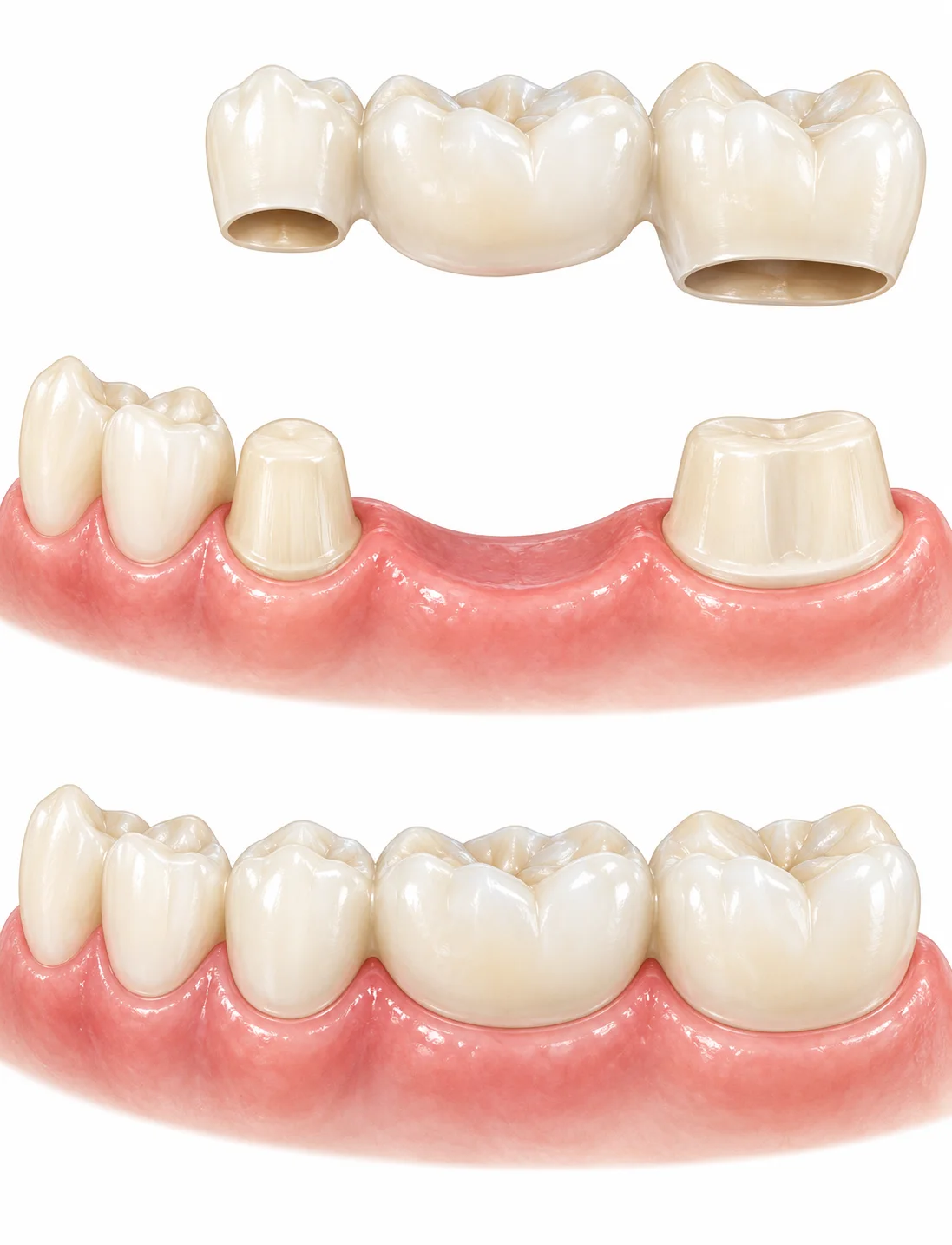
A crown can protect and rebuild a damaged tooth, while a bridge can replace a missing tooth using neighboring teeth for support. The right restoration depends on the teeth, gums, bite, and long-term plan.
Understand your options
A crown covers the visible portion of a prepared tooth and may be recommended when more coverage and support are needed than a smaller restoration can provide.
A traditional bridge replaces one or more missing teeth with a connected restoration supported by teeth beside the gap. It is fixed in place but changes the supporting teeth and requires careful cleaning underneath.
Reasons to talk with a dentist
Not every damaged tooth can or should receive a crown. The tooth needs healthy support, and the dentist considers the root, surrounding bone, gums, and bite.
Dental implants and removable appliances may also replace missing teeth. Comparing preparation, time, maintenance, and cost helps clarify tradeoffs.
Your visit
Dr. Krishna examines the tooth or gap and evaluates nearby structures. Images may be recommended to assess roots and bone.
Supporting teeth are shaped when appropriate, and impressions or scans record the prepared area and bite.
The dentist checks fit, contacts, bite, shape, and appearance before securing the restoration.
Brush along the gumline and clean between teeth daily. A bridge requires a method that reaches underneath.
After your visit
Avoid chewing ice, hard objects, or using teeth as tools. If you clench or grind, ask how those forces may affect the restoration.
Call if a crown or bridge feels loose, the bite changes, floss catches in a new way, or the area becomes painful. Contact the office promptly if a temporary restoration comes off.
Common questions
The amount and location of damaged tooth structure influence the choice. Dr. Krishna can explain the recommendation after an exam.
Neither is best for every person. Bone, neighboring teeth, health, timeline, maintenance, and cost affect the decision.
The crown itself does not decay, but natural tooth can develop decay near its edge. Thorough cleaning remains important.
Keep it if possible, avoid chewing on the tooth, and call the office. Do not use household glue.
Every recommendation starts with an evaluation. Request a visit in Lakehills or call the office with your questions.